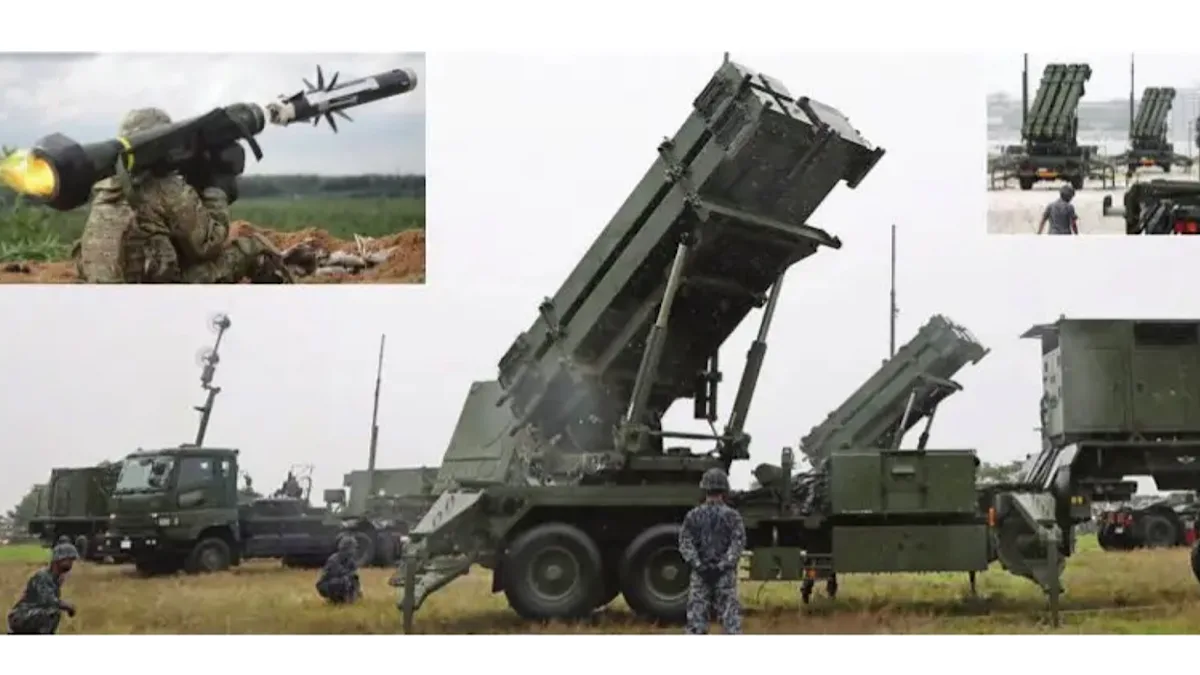
The big news from Tokyo is that the Japanese Diet on 21 April sharply eased its arms export rules, allowing in principle the overseas transfer of finished defence equipment, including lethal weapons. This change in policy is being widely seen in the region as a break from the country’s long-standing post-war restraints.
The decision revises the Three Principles on Transfer of Defence Equipment and Technology and their implementation guidelines. This would mean the government now accords a significant push to the arms industry, whose demand, scale, and sustained state backing shall now remain in focus. The change in the policy removed a framework that had limited exports to five non-combat categories, and now broadens the scope for overseas sales of complete systems, parts, and related technologies.
Advertisement
As a next step, the government of Sanae Takaichi is likely to create a new interagency framework involving senior officials from the defence and relevant ministries to strengthen its ability to promote weapon exports. Takaichi reasoned that no single country can protect its own peace and security alone, and partner countries that support each other defence equipment are necessary. In concrete terms, what would the new rules allow? With the new guidelines, Japan will scrap restrictions that had limited exports to five categories, including rescue, transport, warning, surveillance, and minesweeping. This means that exports of items classified as weapons under Japanese law, including warships and missiles, will in principle be allowed.
In further clarification, defence equipment will now be classified into weapons and non-weapons categories depending on whether they have lethal or destructive capability. Non-weapons such as air-surveillance radar will face no destination restrictions, while exports classified as weapons will be limited to countries that have signed defense equipment and technology transfer agreements with Japan. So far, Tokyo has signed such agreements with 17 countries, including one with India. Under the existing rules, exports of weapons to countries engaged in active armed combat remained prohibited.
The revised policy allows exceptions under ‘special circumstances” tied to a country’s security needs. Japan’s National Security Council (NSC) is authorised to determine if export of weapons would be legitimate. Based on its authorisation, the government shall issue the notification for exports to take place. As if on a fast-track mode, within days of the declaration of the new arms exports guidelines, Japan finalised with Australia contracts for a major frigate deal under which Mitsubishi Heavy Industries (MHI) will supply upgraded Mogami-class warships, making this one of Japan’s most significant post-war arms deals.
The Mogami-class frigate serves as the base design for the joint Japan-Australia development of the Australian Royal Navy’s next-generation frigate. The push by Japan’s defence industry is not sudden; it was building for several years. In November 2023, Japan’s defence ministry announced the delivery of the first air-surveillance radar system to the Philippines under a 2020 contract. Also, under then Prime Minister Fumio Kishida’s government, Japan in December 2023 had eased export restrictions to allow Japan-made Patriot missiles to be shipped to the US, helping Washington replenish stocks as it aided Ukraine to fight against Russia.
There are other examples as well. Japan had plans to expand its participation in high- end defence manufacturing. A key example is the Global Combat Air Program, a joint project with Britain and Italy to develop a next-generation fighter, part of Tokyo’s push to build advanced military technology through new strategic partnerships. Does it mean that Japan should be sitting in self-glorification basking on its laurels? That cannot be the case because as the Iran war demonstrated, weapons stockpiles can be exhausted rapidly, while restocking them can take years. Moreover, Japan is a late entrant to the business of weapons cooperation and exports, and is way behind established producers like the US and neighbouring South Korea with limited manufacturing capacity.
Japanese companies would be reluctant to commit to a business especially if demand is uncertain. True, Japan’s bandwidth is defined by its strong technological base but simply lifting the ban will not be enough. Japanese companies need to be backed by liberal financial support so that those companies can have the confidence to invest for the long term, and actively remain relevant to overseas markets. Without such government backing, the companies may be hesitant to remain invested. The prospective importers of Japanese weapons also need to test the efficacy of Japanese assets as these are not widely tested in the battlefield because of the long period of ban in place, until its recent relaxation.
But given the Japanese deep business culture, any bilateral or multilateral defence collaboration would lead to a win-win situation for both sides. The Takaichi government is already on an overdrive in the weapons exports business. The government entered the lethal weapons export business after lifting the ban on 21 April by revising the Three Principles on the Transfer of Defense Equipment and Technology by clinching the Mogami-class frigate deal with Australia. The following day, the Prime Minister started pitching military equipment and spoke with New Zealand Prime Minister Christopher Luxon appraising him about lifting Japan’s ban on arms exports.
Luxon welcomed Japan’s move and showed interest in the Mogami-class frigate. Takaichi strongly feels that defense equipment transfers would enhance the capabilities of like-minded countries, thereby securing Japan’s own security. She intends to actively pursue sales talks with all 17 nations with whom Japan has defence cooperation agreements. Besides Australia, Britain and Italy, Japan has also transferred used MSDF Abukuma-class destroyer escorts to the Philippines. The longer-term objective is to keep China in check. Japan has further plans to expand deeper cooperation with the Philippines.
(The writer is former ICCR Chair Professor at Reitaku University, Japan)